Sunday, 23 December 2012

Sons And Lovers

All over! Depressing, tragic, passionate, lovely, oh and just a little bit sexual. Well, that's Sons and Lovers for ya!

I can't really sum this one up in a couple of paragraphs, but I'll do my best. Basically, it's the story of a son's attachment to his mother and how this stops him from forming a successful relationship with women. Mrs Morel's love for her son Paul almost smothers him to the point of suffocation and gives him a sort of emotional handicap, as he's constantly searching for his mother's approval in all that he does. His first relationship with Miriam doesn't work out, because his mother doesn't like her. His second relationship with Clara fails because Mrs Morel is ill and he can't concentrate on anything else apart from her. OK, so this could just be the story of a standard mummy's boy who takes it a little bit too far, but it's a little bit more sinister and twisted than that. At one point, Paul takes his family on holiday to the seaside and goes for walks with his mother, treating her jealously if she pays attention to others, and treating her almost like a lover. Nothing is said explicitly that anything dodgy or incestuous is going on, and I'm not sure that there was, but there are certain undertones of a deeper sort of love that Paul feels for his mother.
Paul's only meaningful relationships are with his family and women, so it's interesting to see how he behaves with men; he only really gains male friends about 100 pages from the end. The contrast between the two types of relationships is clear. With the men, Paul is coarse and base, but with the women he allows himself to think more and to become more philosophical.

The whole book is a journey of not-quite-realisation for Paul, as he never really learns how to correct his ways and thereby move forward. We see him make the same mistakes over and over again and see his unavoidable demise throughout the book. It's definitely worth a punt, because it's genuinely fascinating and well-written (it's partly autobiographical, which gives some insight into D.H. Lawrence himself) and really beautiful. Next on my list is Women In Love, by D.H. Lawrence again, to see if Sons And Lovers was just a one-off hit! I'll keep you posted!

Saturday, 8 December 2012

Tess of The d'Urbervilles

I am currently feeling very proud of myself, as this is the first (of hopefully many more to come) work by Thomas Hardy that I have ever read! Talk about depressing for the first taster, though. There is a succession of horrible and dramatic events, some of which include rape, an illegitimate child being born, true love being torn apart and much much more. If you're thinking " I could never ever not in a million years read that book! I would be in floods by the end of it" well, you are not altogether wrong. Yes, you would be in a torrent of tears by the end of it, but it would definitely be worth your while.

The description in this book is outstanding; the rich detail Hardy indulges us in is fantastic. Descriptions of the landscapes, characters and his or the character's observations on the world is astounding-almost like that guilty feeling you get after pinching an extra slice of your sibling's birthday cake...Not that I've ever done that...The immense, amazing and sometimes a little boring descriptions of the fertile landscape could be related back to Tess Durbeyfield and her position in the story, especially as a woman and therefore a vulnerable being. Hardy could either be drawing parallels between the purpose of a woman and the purpose of a landscape, or he could simply be describing what he takes in from looking at a Dorset landscape.

As to Tess herself, I have to say that although I do sympathize and do attempt to empathize with her situations throughout the book, I cannot say that I like her very much at all. I know, I have sinned against the Bible of all classic novels, but I honestly do not think that Tess is a very likable character. If she were living today, we would probably have her referred to a therapist for being a masochist. Truly, the girl seems to love being hurt over and over again by the ones she love. She forgives her rapist, and (spoiler alert) marries him (even though she is already married. That sure sounds like bigamy to me, which I'm sure wasn't legal back then, either) she refuses to tell him to GO AWAY AND STOP BEING A CREEPY STALKER and just lets him carry on stalking her and attempting to gain a way back into her life. She seems (again, I am about to sin) like a bit of a drip, if I'm honest. I could say that for all of the characters, though. Alec d'Urberville is a complete idiot who one wishes she could kill (I shan't spoil it for you) and he refuses to admit that he did any wrong by raping her, and insists that it was her fault for "tempting him"-Hardy's words, not mine. Angel Clare is lovely and I have fallen slightly in love with him. However, I can't forgive him for leaving Tess, drippy as she is. Sorry, I shall stop spoiling and get off the blog. Next, dear followers, I shall be reading, in accordance with what I have just read, a biography of Thomas Hardy, namely The Time-Torn Man, by Claire Tomalin. More updates when that's finished!

Fathers And Sons

Sooooooo... Hard-hitting, morally deep, philosophical Russian novel. Yup, sounds pretty true to type so far. But (although I say this about pretty much every book) there was something different about it which made it thoroughly fascinating to read.

From what I could gather from my dad, who seems to know everything about every book ever, it's the first book of its kind to portray the new breed of "nihilists", who were just emerging in the new generation of Russians in the 1860s. The nihilists basically believed in nothing without explicit proof that it worked or existed. For example, one of the characters, Bazarov, who is a hardcore nihilist, is training to be a country doctor like his father, but when asked if he believes in medicine, he replies that he doesn't. His friend Arkady, on the other hand, professes to be a nihilist, but has romantic inclinations (a romantic was a thing desperately despised by the nihilists for their utter willingness to believe in poetry, music, etc.) meaning that his heart isn't really in it. There's an interesting conflict between Arkady's uncle, Pavel, and Bazarov on their beliefs, but I'll leave it to you to discover the outcome...!

The ultimate test of Bazarov's beliefs comes when he falls in love with Madame Odintzov, a wealthy aristocrat who inherited all of her money from her husband who is, conveniently, deceased. He can't quite accept that he's falling in love as it goes against all of his fundamental beliefs (or non-beliefs, as it may be). His inner conflict (cue Made In Chelsea voice) is incredibly interesting to watch as it starts to define him in a way he doesn't know how to accept.

Well, tres bon indeed, and I thoroughly recommend that you read ca livre! Next, staying with the family theme, I shall be embarking on Sons and Lovers, by D.H. Lawrence, my first Lawrence EVER, so very excited to see how it turns out...

P.S. The translation that I've got of Fathers and Sons was genuinely awful. It anglicized all the Russian names and made some sentences very very hard indeed to comprehend! My advice: don't go second-hand with this one, you're gonna need to get a Penguin Classics or Vintage Classics, they've got the best modern translations.

Thursday, 15 November 2012

The Longest Journey

Not your conventional book about love or family, but tres fascinating all the same...

First of all, Rickie. Being the main character, we do expect him to be flawed, but not to such a great extent. His views on Agnes when he first meets her are fundamentally wrong. He thinks that, as a man, he is made to love everything, and so fixates his "love" onto Agnes, and, as is so common in these sorts of books, refuses to recognise her flaws. He also fails to acknowledge the flip side of a man's love, which is a woman's. According to Forster, a woman can only truly love one man throughout her lifetime; we see this played out in Agnes, and the two opposite concepts eventually cause disaster.

Being the reader, we recognise this and dramatic and tragic irony is immediately set up (don't blame me, I'm doing Romeo and Juliet at the moment in English, so all of these words are being ingrained in my being) and we immediately begin to pity Rickie, especially when the chapter about his family and upbringing comes around. His unloving father and his distant mother all have some part to play in the making of his character, but the main thing is his lame leg. It comes to define Rickie and essentially determine the course of his life (I promise I won't give anything away!)

A really really good one, I thoroughly recommend it! Next I'll be reading Turgenev's Fathers and Sons, although I'm not sure how good the translation is, but I'll let you know soon enough!

Saturday, 13 October 2012

Selected Stories

Oh. My. God. This was the densest book I think I've ever read, apart from his other book that I read, A Portrait Of A Lady. There is literally nothing else I can say about it, apart from the fact that it's almost impenetrable. And is quite well-written, but mainly just dense.

The man, the myth, the legend
OK, I admit it, the writing and storytelling is great, but I really did find it very difficult to get into, as there were large chunks of text three pages long, full of flowery language, the meaning of which is scanty and slightly pointless, and don't really need to be included. The actual stories are very basic, and more about the emotions of the characters rather than the actual exciting happenings of the story, and in that way they're made more dense. James takes the stance that emotions are very complex and so should be expressed so. Lordy Lord, does he ever.

Overall, this was a good book. Can't say much more about it really, but if you don't like dense and impenetrable literature, avoid this with a ten-foot barge pole. Next I'll be reading The Longest Journey, by E.M. Forster, so look out for more!

By The Pricking Of My Thumbs

This was a typical Christie, as far as murder mysteries go, but the detectives were the slightly lesser known Tommy and Tuppence (real name Prudence) Beresford. Although it was good, it lacked something that the Poirots and Marples all have. The story and twist were fantastic, but there was something wrong with the the actual plot, which was good, but not quite right in some way.

Right, so, to start off with the story, the setup of the mystery was very good. It all starts out with a visit to an old people's home to visit Tommy's aunt, where Tuppence meets a Mrs Lancaster, who makes a very odd comment: "Was it your poor child?" However, a couple of months afterwards, when the old people's home re-enters the Beresfords' lives, Mrs Lancaster has mysteriously disappeared, leaving no traceable address and relation. Tuppence, who is curious by nature, decides to go looking for Mrs Lancaster, but there are no leads to go on apart from a small picture of a house that Tuppence is sure she's seen before. So far, so good.

The twist, I definitely can't reveal, it's just too good! If you lot, like me, are nosy in the extreme and just can't wait to find out the end, you'll just have to read the book, because there's no WAY I'm giving this one away! 

The "something wrong" with this book is that there are two very obvious plot lines that, it's so obvious to see, will most definitely come together in some way or another. The first plot line is the one about the disappearance of Mrs Lancaster and Tuppence's quest to find her, but the second, fronted more by Tommy, is about the criminal activity of a Mr Eccles, a very legitimate solicitor, who always seems to be conveniently out of the way whenever any major criminal act, like a bank robbery, occurs. It isn't very clear how these two stories will connect up, but you're sure, from the very mention of the second story, that they will, somehow. From the offset, this doesn't seem quite right, and some of the particulars of the Mrs Lancaster story (which I couldn't possibly reveal) don't ring very clear or well, which is somewhat annoying in an Agatha Christie, as you expect it to be seamless in every way.

Anyway, apart from the irritating plot flaws, this was very, very good indeed! I'll be attempting to finish off the Henry James Selected Stories next, so keep your eyes peeled!

Little Dorrit

This. Is. Incredible. I genuinely loved every minute of it! I started it on holiday and although it isn't your typical holiday read, it was lovely to read it when I was in Italy, seeing as some of the story is set around where we were staying. All very exciting stuff...

Perhaps not Dickens's most comprehensible of works at some points, it is partly autobiographical; Dickens's father spent some years in the Marshalsea prison, and Dickens, at a very young age, had to start working in order to get money together to get him out. This clearly had a rather significant effect on Dickens, as he is very clear on the effect that the Marshalsea has on William Dorrit - it eventually drives him mad. There are constant references to the "shadow of the Marshalsea walls" that affects everything from the weather to the moods of the inmates.

I utterly adored Little Dorrit, or to call her by her proper name, Amy. Being the Child of the Marshalsea obviously means that she has strong connections with it, and so it is ever present in her personality and is at the forefront of her thoughts and actions. She is eternally sweet and unassuming, particularly towards her father, who she dotes on and who is very disapproving of her behaviour towards him in their new-found fortune. His pride and utter awareness of their new social standing makes him slightly repellant towards her. Such treatment of her makes him the most disgusting character in the book, maybe excepting his elder daughter Fanny. At one particularly poignant point during the story, William Dorrit is having a crisis and is reduced to tears over it. Amy, who consistently thinks of him, tries to comfort him, even though she herself is in emotional turmoil, and he takes no notice of her troubles and urges her to fix his problems. At that point, every nerve in my body was strained against William. Anyone who could mistreat dear Amy must be pure evil...

Apart from the Dorrit storyline, there is also a sub-storyline about Arthur Clennam and his prospects, and his mother's business dealings with a shady wrongdoer named Rigaud (or Lagnier, or Blandois) which adds colour and a darker feel to the slightly sugary and pity-mongering story of the Dorrits. The overall product is just fantastic; it makes for a bloody good read (yes, it's true, Dickens really could write a page-turner!) and I really would recommend it looking to read a book that appears to be intellectual, but is actually little more than an extended written soap opera...! Next I'll be reading By The Pricking Of My Thumbs, by Agatha Christie, so look out for the next post!

Saturday, 8 September 2012

Agatha Christie

I think I've read 5 Agatha Christies this summer and around 8 last summer, so I'm not going to focus on any one that she's written because, broadly speaking, they're all very similar in plot detail due to the fact that they're all murder mysteries. I'm just going to briefly touch on the ones I've read this summer and give some detail on each.

The Queen of Crime
The Murder of Roger Ackroyd: This was the one that shot Christie to fame and gave her the title of the Queen of Crime. Hence, the sheer amazingness of this book should most definitely not be underestimated. Although all her books have a twist, this one has the biggest of all, and if you're planning to read it, you will never ever ever EVER in a million years guess whodunnit. Ever.

The Hollow: This book is different to some of Christie's others, because the murder doesn't seem to be the central focus of the book; it's more about the emotional approach of each of the characters to the murder, and Poirot's observations of their movements. A-mazing.

Murder at the Vicarage: This was the first Miss Marple that I've read, and it was odd, because she didn't seem to feature very much in it, apart from at the end when she gave her theory of who committed the murder. The contents of the book is very much to do with gathering the facts and presenting them to the reader rather than formulating different theories. Not my favourite Christie, but still worth a read.

The Big Four: Agatha Christie roams slightly into the realms of the unknown, by writing about a secret organisation, The Big Four, and a series of murders rather than focusing on one murder. In fact, the murder occurs at the beginning and is merely incidental to the story.

And Then There Were None: There is no detective that features in this story to puzzle out the mystery, but all becomes clear somehow at the end...! It's creepy in the fact that you never expect the murder, or the murderer, but it's fantastic. Definitely read this one.

I'll be reading Little Dorrit next, so it might take me a while to update this, but I will... eventually!

A Farewell To Arms

So this isn't a review on Selected Short Stories, by Henry James. To tell you the truth, I haven't finished it yet. But, fear not, I've still been reading plenty, and here's a post about A Farewell To Arms, by Ernest Hemingway, which I read at the start of the summer...

I didn't expect this to enjoy it as much as everyone else who's read it seems to have done, mainly due to the fact that I thought it was just a book about the First World War. I wasn't immediately taken in by Hemingway's writing style, which I'll get back to in a minute, but I discovered that it was so so much more than a book about WW1. There was even a love story woven in, which was beautifully sad, and yet so passionate.

The book is semi-autobiographical, and is based on Hemingway's own experiences of enlisting in the Italian army during WW1 and fighting in the mountains against the Austrians. The main character falls in love with a nurse, and although I can't say any of the details because they'll utterly spoil the book, it is a fantastically gorgeous love story. In terms of Hemingway's writing style, it is very simple and states only the fact. He doesn't indulge in long metaphors or poetic techniques to try and describe his feelings; he only expresses them in the words that fit them best. If anyone's seen the film Midnight In Paris, directed by Woody Allen, Hemingway's writing style is pretty much exactly the way Hemingway acts in that film. He can be very dryly funny, but incredibly honest, which is difficult to get your head around if you're used to reading (like me) Dickens's long, flowery, descriptive passages. That isn't to say that it isn't as good as Dickens, because it is, but it's just different.

I adored this book, and am planning on reading many many Agatha Christies on holiday, so look out for the next post!

Wednesday, 4 July 2012

The Passage

Again, I apologise for not posting this sooner, but I finished the book quite a while ago now, and I've just been a bit lazy in updating my blog, but better late than never, right?

So, The Passage. It is utterly fantastic. No joke. The title is slightly ambiguous, but the story starts in America in the not-so-distant future (only around 20 years or so ahead), and follows the separate stories of Amy and her mother (a 6 year old girl and her mother who has to prostitute herself to earn money), Anthony Carter (a death row prisoner in Texas), and Brad Wolgast (a special agent for the Armed Forces).

Basically, one doctor has discovered a virus that turns the victim into a vampire-they drink people's blood, are impossibly fast, can't exist in the light, etc. They don't speak in human language, though, and they communicate via telepathy. For test subjects, they use death row prisoners, as it is easy to erase their past, and that's how Carter comes into the story. The doctor says he wants a child to test the next strain of the virus on, and so that's how Amy is weaved into the plot.

Fast-forward ninety-odd years, and we are in a post-apocalyptic society, in a colony of the only remaining humans. In the time that Wolgast was living in, the virus got out of control at the compound, and the 12 test subjects killed or maimed everyone and turning the survivors into vampires. Wolgast and Amy escaped and hid in the forests in Colorado. I wouldn't be able to tell you everything that happens, and if I did it would only ruin the plot for you, so you'll have to read it for yourselves to discover what happens, but all I'll say is that you won't ever see it coming...

The plot is gripping, and the characters are fascinating. It is wonderful to see how they develop throughout the course of the story, and to see how they interact with each other. My only criticism is that the end doesn't feel very satisfying. It feels a little as though Justin Cronin was on a deadline, or was writing to fulfil the needs of his readers and so just rounded it off with a happy ending. There's a sequel coming out in 113 days (or so Waterstone's tells me), but I don't really know where else Cronin could go with the story; he's sort of covered all possible bases in terms of twists and surprises...

Anyway, next I'll be reading Selected Stories, by Henry James, so you'll have to wait a while for the next blog post, I doubt I'll be finishing it any time soon! 

Thursday, 7 June 2012

The Help

This is a long-overdue post, and I deeply apologise that I've become so lazy with my blogging. Reasons: revision, tests, GCSEs, revision, READING, revision, etc. WARNING: there will be many, many spoilers in this next blog...

Emma Stone as Skeeter
So, The Help. An utterly fantastic book with gorgeous characters (and some mean ones too), a great plot and a message that rings loud and clear. The message of the book was one of its defining features; the fact that black people had to fight to get equal rights in America throughout the '50s and '60s tells you something about the functionality of American democracy... It makes one realise the hardships that people had to go through, and not only black people, but also white people who supported the Civil Rights movement, and women too. The moment when Skeeter is dumped by her boyfriend Stewart simply for writing the book is particularly poignant and illustrative of how narrow-minded people used to be. Skeeter also comments on the fact that not many of her female classmates actually finished college, as they all went off to be married or to have a baby; this was, really, the height of feminine achievement in the 1950s. To marry and to be the perfect housewife and homemaker was every woman's dream and aspiration. We can really appreciate, then, how much times have changed.

My favourite characters were definitely Minny and Miss Celia Foote. Just watching how their relationship progresses throughout the book is a hilarious venture. Celia's naivete in terms of hiring a maid and housekeeping is particularly funny, as we see how Minny copes with all of Celia's domestic failings. And who could ever forget Minny's crowning moment with the pie? I shan't reveal exactly what happens, but let's just say that Miss Hilly bit off more than she could chew...

Overall, amazing book, and amazing film, with Emma Stone (who I have a slight girl crush on), go and watch it if you haven't already! Next I'll be reading critically acclaimed The Passage, by Justin Cronin, so look out for more updates!

Monday, 20 February 2012

Gone With The Wind

And so, I have finally finished the 1010 page epic novel that is Gone With The Wind! Jeez, am I ever proud of myself. Without a doubt, it is the longest book I have ever read, and it was most certainly the best! I know I say that in almost every post I write, but seriously, this is my favourite book, along with The Tenant of Wildfell Hall and David Copperfield. I kid you not. Just a warning, don't read this one if you haven't read the book or seen the film and are planning on doing so. A lot of the major plot twists (of which there are many!) are revealed...

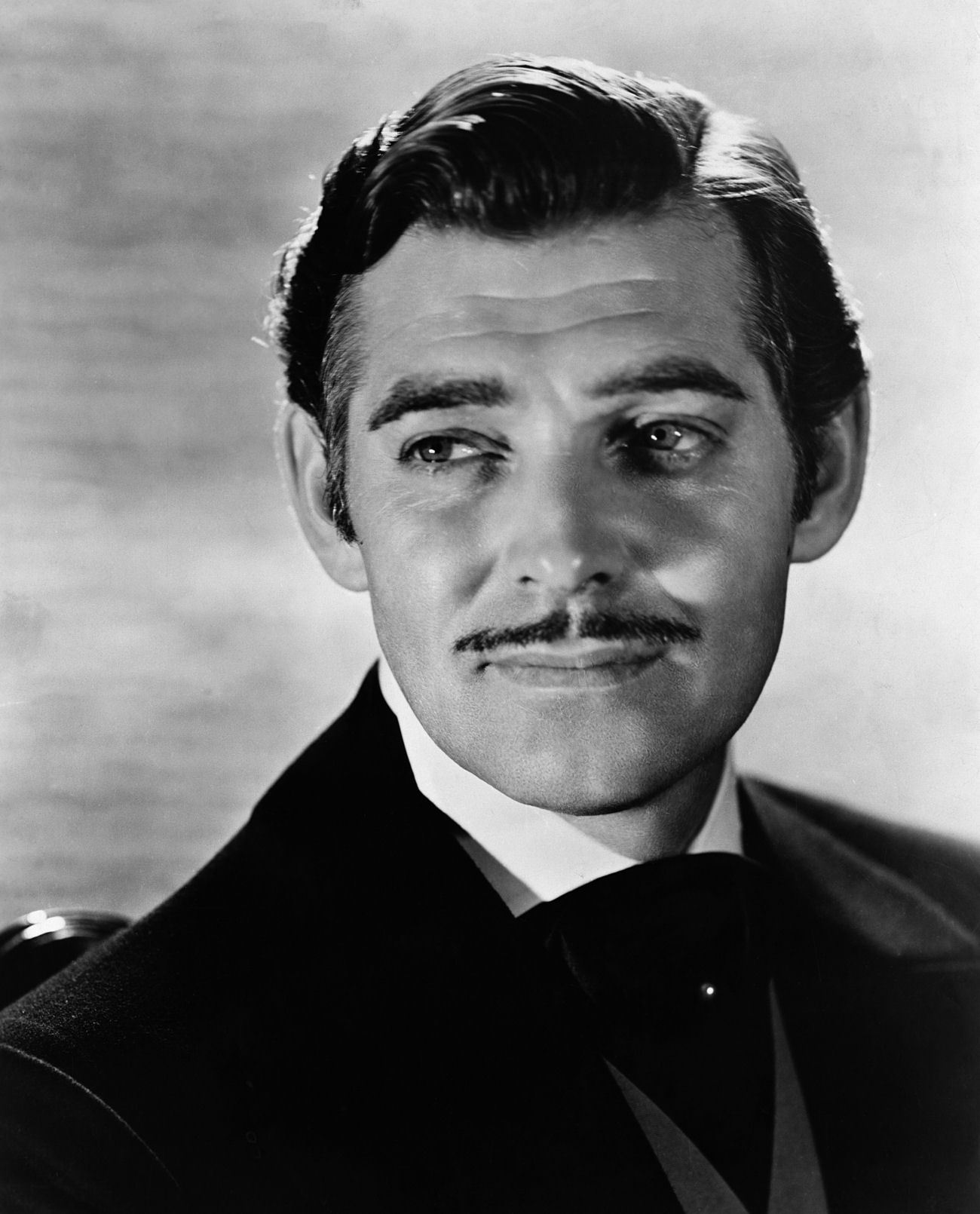
I shall open this paragraph by saying  I LOVE RHETT BUTLER! There we go, all out of my system now. He is just too amazing for his own good! This may be a total cliche, but to be honest, nothing matters but the fact that I am absolutely and completely besotted with him. Yes, he may have a drink occasionally (and that occasion may crop up more and more often as we near the end of the book), and he may be tempted by the flesh once in a while, but he is a wonderful father to his child, Bonnie, or more formally, Eugenie Victoria, and he loves Scarlett dearly and with all his heart. I can only hope that I find a man in my life anything like him. Katie Scarlett O'Hara, or, in the order of her numerous husbands, Scarlett Hamilton, Scarlett Kennedy and Scarlett Butler, is an interesting sort of a character. Before the war, the most important issue on her mind is what dress to wear that will suitably show off her 16 inch waist, or what colour hair ribbon to wear to the dance. During the war, she becomes hard-hearted, and willing to shoulder a "man's" burden at a moment's notice. After the war, she becomes vulgar, snotty and brash, throwing off all of her old friends at a moment's notice to be able to associate with those with money; they are known in the book as "Carpetbaggers" (Yankees who have moved down to the South with all of their belongings in a carpet bag) and "Scallawags" (old Southern Democrats who took the Republican vow for personal gain). This change is an interesting one to witness, although it's only after reading it that I noticed how odd it was for her to take up so many responsibilities at the drop of a hat. One can only put it down to the love of her home, Tara, and the desire to save it from the Yankees at whatever cost it may come to herself.

My love, Rhett
The book gives you an insight into the lives of Southerners at the time of the American Civil War. The majority lived in poverty, scrimping and saving to buy the necessities, and not knowing where their next meal would come from. To the surprise of many, a lot of the noble characters in the book who would heretofore never stoop to such work, begin baking and embroidering and taking in lodgers in order to make some money. It was only the lucky few, like Rhett Butler, who had any money at all, and he only made that money from blockading and speculating, a dishonourable occupation in the eyes of Atlanta and the rest of the South. The book tells us of the struggle many Southerners went through to rebuild their lives and their fortunes.

Many people would say that the Southerners don't deserve our sympathies, that they horribly mistreated black people and that they were racist, immoral people. Some of this is true, some of it isn't. What Gone With The Wind does is alert us to the perspective of the Southerners during the Civil War. Yes, they supported slavery, and yes, they did have some ignorant attitudes towards black people, but their morals were high and their etiquette greatly honoured. I am in no way defending their behaviour, merely offering a different side to the story and a reason for the behaviour so frowned upon. They were scared of the Yankee invasion of their homes, and the Yankees, being demonized by the Southern press, acted in no way to be able to disprove these roles that they were given. I want to make it clear at this point that I am not a Redneck nor do I ever intend on becoming one. I am in no way supporting their behaviour to others, but I can understand why they did it. Not to be confused with supporting. At all.

The twists and turns in the plot, the intricate detail of the characters, the fantastic backdrop (I actually learnt a little about the Civil War!) all combine to make for an amazing book. If you only read one book about the American Civil War, make sure it's this one. In keeping with the theme of the Deep South, I shall be reading The Help, by Kathryn Stockett. I'll keep you posted!

The Night Cleaner

I reviewed this for The London Student, who have very kindly agreed to publish it in their next edition, so forgive the formal style...!


The disastrous economic climate at the moment is one that is affecting everyone. The crisis that essentially, kicked off with the collapse of the US housing market ended up having an effect, whether small or big, on the economy of many countries. One of these countries – often overlooked when we talk about the 2008 recession – was France. ‘The Night Cleaner’ by Florence Aubenas, tells the story of a successful journalist who decides to go undercover as one of the hundreds of thousands of France’s unemployed in order to get the inside story on this global phenomenon.

Florence Aubenas is a French reporter who has written about many politically difficult situations. In 2005, she was captured by a group of guerrilla fighters in Iraq, and emerged after 157 days of captivity relatively unscathed. Soon after this, Aubenas decided to immerse herself in the life of the unemployed, and determined to uncover what for many people was the reality of the economic recession. She spent six months as “Madame Aubenas”; a woman aged forty eight with only one qualification – the French Baccalaureate. She posed as a woman who had never worked before, who had just split up from a long-term relationship with a man who had been the sole provider, and who refused to continue to pay for her needs after the split. Ingenious disguise though it may have been, it meant giving up her entire way of life for six months in order to keep her real identity safe; that meant that she couldn’t draw any money from her bank account or ask anyone she knew for extra financial help. This led her to the decision of going to stay for six months in Caen, a town in Normandy and a town where she was anonymous. She intended to stay in a furnished room, look for any amount of temporary work until she was offered a permanent job somewhere.
Florence Aubenas
“Among the rules I’d established for myself, one was that I would bring this experiment to a halt as soon as I was offered a permanent job.” Aubenas says in the book “I didn’t want to block anybody else’s chances of a real job.” The result of the experiment, as she so terms it, is the writing of a conscientious observer to a situation so engulfing of every type of person. On her first visit to the job centre, it is established that, as her character, she must be patient when looking for work, as her lack of a vehicle and her status as a single woman over forty five with no recent pay-check will put her to the bottom of an employer’s list of priorities. 

After six weeks of searching for a semi-permanent job which would help her to pay the rent, Aubenas applies to be a night cleaner at the Ouistreham Ferry Company; a company infamous for its low wages and appalling employee care. She is told upon entering the world of the unemployed to avoid working for them at all costs. Although the situations of many were worse than Aubenas’ none would dare to go near such a place. After working with the ferry company, she gets a job, for a few hours a week, as a cleaner at a holiday site. This leads to several offers for a few hours here and there from the same company, until she is finally offered a job at the ZAC, an office block.

The book itself is very revealing of the difficulties an unemployed person can face. One must spend one’s time waiting for job opportunities, driving to and from far-off places to work for just a couple of hours, attending workshops held by the job centre, figuring out how to pay the rent, and, crucially, working for those few hours every day, doing backbreaking work for a scanty wage. Aubenas’ ability to be able to empathise with the people she meets sets this book apart from all others of its kind. In every respect, it shows just how problematic being unemployed can be, and reveals the human side of the economic crisis, one which not many of us would know about unless we ourselves had experienced it. Humans have a tendency to avoid looking at the difficulties in a situation, and Florence Aubenas has made the difficulties of this particular situation obvious and unavoidable. She makes people face up to reality, and she is to be applauded.

So, next, I'll be reading Gone With The Wind, by Margaret Mitchell, so look out for more updates!  

Saturday, 28 January 2012

To Kill A Mockingbird

This fantastic book has no words sufficient to describe it's fantastic self. This is most definitely one of my favourite books of all time. I know I repeat this every time I blog, but it really truly is. This being the third time I've read it, the simple humour, the naivety with which it's written, the emotions et tout hit me once more as though I'm reading it fresh for the first time. I truly truly love it. 'Nuff said.
Gregory Peck (kinda love him)

I'm going to say straight up that my favourite character is (drum roll please) Atticus Finch. Yes, he may be everyone's favourite character, but he's mine too. He strikes me, not only as a fantastic user of common sense, but a loving man who takes good care of his children and always does what he knows is right. The simple fact that the accepted the Tom Robinson case demonstrates this to perfection. I bet that no other lawyer within the whole of Alabama would have touched a case like that in the time this book was written, but Harper Lee, by making this decision for Atticus, instantly sanctifies him within the hearts of many modern readers. Having learnt about the difficult experiences of black people during the thirties, all of the attitudes of the townspeople seem totally alien to me, but I admit that, as they were the norm, it must've been difficult for people like Atticus Finch, with opposing views, to speak out against the injustice they saw so plainly. The character of Atticus Finch was based upon Harper Lee's father, who, like Atticus, was an attorney. In 1919, he defended two black men who were accused of murder. He lost the case, the two men were hung and mutilated, and he never tried another case again. This autobiographical aspect of the book makes its message particularly poignant for those of us modern readers trying to put the happenings of the book into perspective with what we know happened.

The whole book is based roughly around Harper Lee's life. It was set in 1936, when Lee was ten years old. The character of Dill was based upon Truman Capote, who used to live next-door to Lee and her family during the summer with his aunts, whilst his mother visited New York for the few months of summer holiday. Scout herself is based very rigidly upon Lee herself. Harper Lee was a tomboy and had a very quick temper. As in the book, both Lee and Capote loved to read as children, and as a result of that and other factors, both were ostracised by their peers. Hence, a strong friendship sprung up between the two. They acted out stories on Lee's front porch (like Dill, Jem and Scout acting out their story of the Radley tale) and typed up stories on an old typewriter given to them by Lee's father. Harper Lee did have an older brother named Edwin, who, like Jem, was four hears older than her. Inspiration for the Radleys came from a family that lived up the road from Harper Lee in her childhood. Their house was always boarded up, they kept themselves to themselves, and, after the youngest son got into trouble with the law, the father locked him up and kept him in the house for twenty four years. With all of this combined, it is very easy to draw parallels and say that this book is an indirect autobiography.

The book itself is pure genius. Simply fantastic. Amazing. Stupendous. Beautifully written. Well-characterised. Beautiful style. Marvellous. If I come up with any more positive adjectives to describe it, it would be a dictionary blog, not a blog about reading. I can't find the words to analyse this book. Just read it, people.

Next, I'll be reading Gone With The Wind, by Margaret Mitchell, which is 1010 pages long... So I'll also be reading The Night Cleaner, by Florence Aubenas at the same time! Wish me luck!