I shall just start off by saying that this is the longest time it has taken me to read a book. Ever. The rhyme and reason to it is that it was so dense in terms of language and Henry James's method of arriving at a point that I couldn't read it as quickly as I would have liked to. But we'll get on to that in just a second.
So, here we are, a second later, and I will continue (thank you very much) with the fact that it wasn't that the subject matter or the characters were overwhelmingly complex, but it was James's way of telling the story through a constant analysis of the emotions, the plot, the characters, the surroundings, and everything else running through the story that it was hard to keep the narrative in sight. It's the first book like this that I have read, and although some people may go right now to look at my previous posts and rather wish to contradict me wholeheartedly, I would just now like to stop them and say that although I have read the works of many other authors who were writing at around the same time as James, none of them use language in quite the same way. Austen, for example, rarely goes into detail about events that are not essential to the story, and skips over them as though they didn't even happen. In stark contrast, James delves into the hidden meaning in every tiny detail, with which The Portrait of a Lady is riddled. Anne Bronte, too, mainly concentrates on what the characters feel, but it is more what they feel in a particular moment, rather that what they have been feeling over the past year, or how the change in X made her feel Y. In that respect, it was quite refreshing to read something so different to other books.
Another difference was that the story did not end happily! I won't go into detail, but our heroine, Isabel Archer, is left feeling unsure, Madame Merle guilty, Gilbert Osmond outraged, and Ralph Touchett in a rather dramatically changed state of health (I said I wouldn't go into detail!). In any case, it was nice that Isabel didn't get what she wanted, for a change!
The quality of James's writing, however dense it is, is undeniably superb. One cannot argue that it is base because it makes too much sense. One can't argue that it is flowery and over-decorated, because everything that has been written seems to have a specific purpose. Even the tidbits of humour are there clearly because James wanted to make his readers laugh; James is most definitely a master of his art. The end is perfectly planned, and even the massive twist, written with just a hint of the melodramatic, is delightful to the gossip within us. The story seems natural, and everything that the characters do seem natural, almost as though it couldn't have been any other way. You know when a story is good when it does this.
Next, I'll be stepping away from eighteenth century England and going to Alabama in the 1930s, as I shall be (re)reading To Kill a Mockingbird - for the third time. Not that I want to boast about it or anything, but yeah, the third time.
Thursday, 22 December 2011
Thursday, 27 October 2011
Jamaica Inn
Firstly, I have to say that I feel very guilty for not having done this in a while, but here it is. I haven't been reading Jamaica Inn for 3 or so months, but I'm going to skip the many books I have read since then and go straight on to the book I'm starting. Anyway, Jamaica Inn. There's not much you can say about it without repeating the same phrase over and over again: "Oh my giddy Aunt Godwin, that was the most amazing book I have ever read, and ever will read!!!". It's true, and there's no point in denying it, for the reasons about to follow.
The style of writing is simply superb. Daphne du Maurier had a wonderful gift for words, and the style and shape and the underlying messages, the little hints, the portrayal of the characters, and most of all, the way of life in whatever circumstance she is describing to us as the reader; it doesn't matter if the main character is the young wife of a rich aristocrat or a young woman made to help out in a pub involved in smuggling stolen goods, but their way of life is so profoundly communicated to the reader that you can't help but imagine what life must have been like for that particular class of persons.
Daphne du Maurier also has a fantastic gift of weaving a story in one direction and then taking you completely by surprise and veering it another way instead. The twists and turns of Jamaica Inn are unexpected, and yet the little hints given to you by du Maurier all the way throughout the book serves to give you a shiver up your spine, and yet give you the odd feeling that you sort of knew that it was going to happen , and when it does, you are surprised but with a strange mixture of "I told you so" about it. For example, (SPOILER ALERT!! If you haven't read it, stop reading NOW) when we find out the truth about the vicar of Alternun, I realised I knew all along that he wasn't quite right, and not one to be trusted with your darkest, deepest secrets, if you get my drift. I knew as soon as I met him that I wouldn't like Joss Merlin, simply from the daunting description Daphne du Maurier gives us, and, in particular, the clever use of pathetic fallacy, which is the portrayal of foreboding through objects, and in particular, the weather.
The characters are in depth and interesting, just like any other one of Daphne du Maurier's books. The main character is a young woman called Mary Yellan, who is unused to the harsh weather and isolation of her Aunt Patience's house in Cornwall. She is confined to the dim and lonely Jamaica Inn, where she must help her scary uncle Joss to run his bar on a Saturday night. She is rarely allowed out of the house, and on certain nights she must keep her ears covered and not get up out of bed, for beneath her window there is some dodgy dealing going on which she must not reveal or even know about. However, when she gets wind of what's really going on, she runs to her ally, the vicar of Alternun. I shan't tell you what happens next, you'll just have to read it to find out, but all I'll say is that it is a truly fantastic book and whoever is reading this now needs to go and pick up a copy and start reading it. Next I'll be reading A Portrait of a Lady, by Henry James, so keep your eyes peeled for more updates!
Daphne du Maurier also has a fantastic gift of weaving a story in one direction and then taking you completely by surprise and veering it another way instead. The twists and turns of Jamaica Inn are unexpected, and yet the little hints given to you by du Maurier all the way throughout the book serves to give you a shiver up your spine, and yet give you the odd feeling that you sort of knew that it was going to happen , and when it does, you are surprised but with a strange mixture of "I told you so" about it. For example, (SPOILER ALERT!! If you haven't read it, stop reading NOW) when we find out the truth about the vicar of Alternun, I realised I knew all along that he wasn't quite right, and not one to be trusted with your darkest, deepest secrets, if you get my drift. I knew as soon as I met him that I wouldn't like Joss Merlin, simply from the daunting description Daphne du Maurier gives us, and, in particular, the clever use of pathetic fallacy, which is the portrayal of foreboding through objects, and in particular, the weather.
The characters are in depth and interesting, just like any other one of Daphne du Maurier's books. The main character is a young woman called Mary Yellan, who is unused to the harsh weather and isolation of her Aunt Patience's house in Cornwall. She is confined to the dim and lonely Jamaica Inn, where she must help her scary uncle Joss to run his bar on a Saturday night. She is rarely allowed out of the house, and on certain nights she must keep her ears covered and not get up out of bed, for beneath her window there is some dodgy dealing going on which she must not reveal or even know about. However, when she gets wind of what's really going on, she runs to her ally, the vicar of Alternun. I shan't tell you what happens next, you'll just have to read it to find out, but all I'll say is that it is a truly fantastic book and whoever is reading this now needs to go and pick up a copy and start reading it. Next I'll be reading A Portrait of a Lady, by Henry James, so keep your eyes peeled for more updates!
Saturday, 6 August 2011
It's A Battlefield
What can I say? There isn't much that I can say without repeating myself in a very tiresome manner, because if I'm honest, I'm not too sure that I fully understood the message or theme of the story.This book was intriguing in all its obscurity, and yet most of the time the obscurity overwhelmed the genius at some points...
The narrative voice of the whole book is from other people's perspective and it got incredibly confusing at times. Each chapter would be written as a different character, but as the chapters were quite long and you therefore got used to the character's "style of writing" and personality, it therefore became incredibly confusing when the chapter ended and the narrative voice suddenly switched. This, understandably, made it difficult to give full attention to the storyline and what was happening at separate points in the story.
The characters themselves were bland and didn't have much to define each of them apart from a few key characteristics to each of them, for example, the Assistant Commissioner of Scotland Yard speaks with a stutter; Conrad Drover is rather cautious and looks up to his brother, the bus driver whose arrest and potential hanging is central to the characters and plotline. The reactions of each of the characters to this particular event is intriguing if you are reading it from an educational point of view, but not if you are reading it as someone who simply wants to look for a little light reading. Next, I shall be reading Jamaica Inn, by Daphne du Maurier.
The narrative voice of the whole book is from other people's perspective and it got incredibly confusing at times. Each chapter would be written as a different character, but as the chapters were quite long and you therefore got used to the character's "style of writing" and personality, it therefore became incredibly confusing when the chapter ended and the narrative voice suddenly switched. This, understandably, made it difficult to give full attention to the storyline and what was happening at separate points in the story.
The characters themselves were bland and didn't have much to define each of them apart from a few key characteristics to each of them, for example, the Assistant Commissioner of Scotland Yard speaks with a stutter; Conrad Drover is rather cautious and looks up to his brother, the bus driver whose arrest and potential hanging is central to the characters and plotline. The reactions of each of the characters to this particular event is intriguing if you are reading it from an educational point of view, but not if you are reading it as someone who simply wants to look for a little light reading. Next, I shall be reading Jamaica Inn, by Daphne du Maurier.
Wednesday, 13 July 2011
They Shoot Horses, Don't They?
I have to say, I'm not sure I understood this book as fully as I might have liked to. Despite the fact that the storytelling ability of Horace McCoy is not at all to be called into question, I do think he might have explained the story further instead of leaving it up to the reader's imagination, because if a perfectly structured story is left up to the imagination, it starts to crumble to pieces.
The setting of a marathon dance competition was effective and thoroughly creative, in my opinion. It outlined the difficulties in the character Gloria's life; when someone is put under continuous strain and physical endurance, they start to reveal facts about themselves to absolute strangers that they wouldn't have done in another situation. We soon see that Gloria is intensely suicidal, and has been considering it for some time. Maybe suicide was written about so much because it had previously been a slightly taboo subject, and as soon as the bars were lifted on it, previously unheard and suppressed views flooded out into the world of print publication. In any case, it is a main feature of the novel and calls up questions in the reader's mind about your own state of happiness, and how on earth anyone could be driven to such lengths as to kill themselves?
The reason I don't feel the book is fully explained is that I didn't feel that it built up enough to the climax of the story; there was too little time and a same-y sort of feel in between the time where we first meet each of our characters and when the major event happens (I shall not reveal what it is, because that would be telling, obviously), which left me feeling unsatisfied and incredibly confused. I like a bigger change in atmosphere when it comes to a sudden event, and, for me, there wasn't a big enough change.
Nevertheless, I liked the book intensely, in spite of its minor flaws, and finished it in a matter of hours! Next I shall be reading It's A Battlefield, by Graham Greene, so look out for further updates!
The setting of a marathon dance competition was effective and thoroughly creative, in my opinion. It outlined the difficulties in the character Gloria's life; when someone is put under continuous strain and physical endurance, they start to reveal facts about themselves to absolute strangers that they wouldn't have done in another situation. We soon see that Gloria is intensely suicidal, and has been considering it for some time. Maybe suicide was written about so much because it had previously been a slightly taboo subject, and as soon as the bars were lifted on it, previously unheard and suppressed views flooded out into the world of print publication. In any case, it is a main feature of the novel and calls up questions in the reader's mind about your own state of happiness, and how on earth anyone could be driven to such lengths as to kill themselves?
The reason I don't feel the book is fully explained is that I didn't feel that it built up enough to the climax of the story; there was too little time and a same-y sort of feel in between the time where we first meet each of our characters and when the major event happens (I shall not reveal what it is, because that would be telling, obviously), which left me feeling unsatisfied and incredibly confused. I like a bigger change in atmosphere when it comes to a sudden event, and, for me, there wasn't a big enough change.
Nevertheless, I liked the book intensely, in spite of its minor flaws, and finished it in a matter of hours! Next I shall be reading It's A Battlefield, by Graham Greene, so look out for further updates!
David Copperfield
I know I say this every time, but I don't know whether or not I have read a more enjoyable book than this one. It wasn't just the fantastic characters or the brilliant story that made it so unbelievable (although they were equally as important) but it was the undying humour throughout the whole book that caught my attention.
In terms of the characters, the one I both loathed and adored was the infamous Uriah Heep. The infinite cries of "because I am a very umble being, Master Copperfield" are, it comes to pass, a facade put on in his intelligence to lull the reader into a false sense of so-called security; all is dropped when Mr Micawber gathers up enough courage to condemn the villain - HEEP, and in a moment of violence and anger, Uriah Heep loses all sense of rationality and snaps. Much to the reader's shock and pleasure (for it means there shall be extra excitement and fun for us in terms of plot) we see how mercilessly he has fooled us into believing he really is "umble", when he is in fact, towards the end of the book and nearing the time of his demise, much more in possession of worldly goods than he cares to let on in order to keep them flowing in. He barbarically decieves his partner, Mr Wickfield, so far that poor Mr Wickfield becomes almost fatally ill; we can see how far the influence of Uriah Heep has taken hold of him only when he is gone, when his very disposition is altered for the better, his illness clears up, and he begins to be much like his old self once again. The small details in Uriah Heep's personality, such as his writhing, and his slimy skin, recommends himself in one's mind to be much akin to some sort of horrific reptile or sea creature of some sort. He present himself to the reader as a force to be reckoned with, and with every writhe or glint of the snaky red eyes "like glaring red suns" we begin to subconsciously hate him, and every effort David Copperfield makes against him gladdens our hearts. One event of the sort was when Copperfield gave Heep a massive whack in the jaw. My heart leapt when I read it, hoping against hope that Heep would take offense and storm out of the house, never to be seen again. Much to my disgust and annoyance, he only forgave Copperfield, saying that he knew his tempers to be a little high tonight, and it was probably to do with the port he drank at dinner. Sticking true to Oscar Wilde's famous advice "always forgive your enemies-nothing annoys them so much". It is true; from the time that we meet Heep we are put against him and made to become his enemies with no more power than that of words and a good bit of decent storytelling. Which, I can assure you, is no bad thing once you get to know his true character.
The dear and darling Dora Splenlow captures our hero's heart, though certainly not mine. He falls in love with her at a dinner party; I am happy for Copperfield that he has finally found someone to love who is within his grasp, but do truly doubt his choice. She is a silly, immature, dithering sort of a girl, though with some credit to her, does love David with all her heart. I, for one, cannot stand her. All the petting and attention she recieves is better spent elsewhere, and her absolute refusal to keep accounts or learn to cook for practicality's sake is pure nonsense. I felt ecstatic that Copperfield had finally found and engaged someone who he could love and cherish, though not necessarily to rely upon, as he comes to realise later on in the book. Her utter uselessness is exasperating to him, as several domestic crises occur in a very short space of time. He sees that he is the only one with a clear head on his shoulders, apart from his beloved and somewhat stalwart aunt, and utterly deplores the fact that Dora cannot think of anything but her pet dog Jip, or how to keep her "Doady" (some distortion of David, as Dickins cleverly names it) happy and content. Altogether, she may be quite pathetic and stupidly exasperating, but we cannot help, like our hero, becoming very much attached to the poor thing.
Overall, it was a marvellous book with the quality of writing flawless, as was the deep characterisation and plot; I was thoroughly exasperated when it was over and quite stuck as to what to do afterwards! Next I shall be reading They Shoot Horses, Don't They? by Horace McCoy.
The dear and darling Dora Splenlow captures our hero's heart, though certainly not mine. He falls in love with her at a dinner party; I am happy for Copperfield that he has finally found someone to love who is within his grasp, but do truly doubt his choice. She is a silly, immature, dithering sort of a girl, though with some credit to her, does love David with all her heart. I, for one, cannot stand her. All the petting and attention she recieves is better spent elsewhere, and her absolute refusal to keep accounts or learn to cook for practicality's sake is pure nonsense. I felt ecstatic that Copperfield had finally found and engaged someone who he could love and cherish, though not necessarily to rely upon, as he comes to realise later on in the book. Her utter uselessness is exasperating to him, as several domestic crises occur in a very short space of time. He sees that he is the only one with a clear head on his shoulders, apart from his beloved and somewhat stalwart aunt, and utterly deplores the fact that Dora cannot think of anything but her pet dog Jip, or how to keep her "Doady" (some distortion of David, as Dickins cleverly names it) happy and content. Altogether, she may be quite pathetic and stupidly exasperating, but we cannot help, like our hero, becoming very much attached to the poor thing.
Overall, it was a marvellous book with the quality of writing flawless, as was the deep characterisation and plot; I was thoroughly exasperated when it was over and quite stuck as to what to do afterwards! Next I shall be reading They Shoot Horses, Don't They? by Horace McCoy.
Saturday, 28 May 2011
The Heart Is A Lonely Hunter
I say this in all honesty; I am not entirely sure whether I have experienced a more brilliantly detailed and skilled novel as this in all my thirteen (almost fourteen) years. I must admit, this is not the first Carson McCullers book that I've read, and indeed, the two books that I have read of hers are entirely different that they cannot be compared in any way. What I shall attempt to do, however, is draw a sufficient picture of what this one was about, as it isn't the easiest of tasks.
I truly loved this book, although it's difficult to explain why, as there wasn't really a definitive storyline. It starts out by introducing each of the characters in the first two chapters. There is Singer, the deaf-mute central to the plot, Spiros Antonapoulos his mute friend, a cafe owner, a drunk, a black doctor and a teenage girl. The stories of each of these people are so incredibly mundane and prosaic that there is almost nothing interesting about them except for the nature of the characters themselves. The main story itself is made up of several big events connected up by small everyday occurrences. For me, the purpose of having such a structure for the storyline is to watch the development of each of the characters in response to Mr Singer. Possibly the most intriguing of these characters is Mick Kelly, the teenage girl who acts like a boy at the beginning of the book, and at the end has become a right young lady. We see how she becomes slightly obsessed with Singer and his silent listening as she rambles on and on to him about music, school etc. She is the most fascinating of the six characters for me, because I can relate to her the most. She feels self conscious at the beginning about her changing body, and is reluctant to wear girl's clothing to disguise the changes occurring in her. This assuredly female obsession with the appearance is personified beautifully in Mick, as it is through her that we see how innocent and childish it is, and how it becomes apparent in different people. Through Blount, the drunk, we see how obsession can take root in a person's mind, how it affects everything they do; through Doctor Copeland we see how ideology develops into an obsession; through Biff Brannon, we see how human affection can move from one person to another in the eyes of one who has obviously been thoroughly disappointed in life; through Singer, we see the bemused observations of an idolized man who has been turned into some sort of messiah by those who talk to him.
First come the chapters written in the perspective of each of the four people who talk to Singer personally, then comes the chapter written from the point of view of Singer, who comes off utterly bemused and perfectly baffled by the words spoken to him by his four visitors. To see this dichotomy within the very structure of the book is effective and amusing for the reader, particularly when we read about Jake Blount, and how he has the idea that Singer "knows" just like him, and then we read about Singer, who tells us that most of the time he doesn't have a clue about what Blount waffles on about. It is written with humour and quiet cleverness and with such detail that it is astounding to read such a book.
Whenever I was asked by any member of my family whether or not I liked the book, I would answer emphatically that it was amazing, possibly the greatest book I had ever read. When asked what it was about I would pause, think and answer confidently "Nothing really". This would always result in scoffs and guffaws from the family, and questions from my younger sister about how it can be a good book if there isn't a story (in answer to your question, Lottie, it just can.). But it's true; there isn't really a story to it, and yet I found myself totally in awe at how a human could've written such a masterpiece. The truth is that it doesn't really need a storyline to make it a good book, because the amount of description and characterization in it makes up for the lack of excitement. It is a book about ordinary people living in an ordinary town, doing ordinary things with their lives. Exciting things don't happen to us on a regular basis, so why should they in books? Altogether, I thought it was a work of pure genius! Next I'll be reading David Copperfield by Charles Dickens, so watch out for more updates!
I truly loved this book, although it's difficult to explain why, as there wasn't really a definitive storyline. It starts out by introducing each of the characters in the first two chapters. There is Singer, the deaf-mute central to the plot, Spiros Antonapoulos his mute friend, a cafe owner, a drunk, a black doctor and a teenage girl. The stories of each of these people are so incredibly mundane and prosaic that there is almost nothing interesting about them except for the nature of the characters themselves. The main story itself is made up of several big events connected up by small everyday occurrences. For me, the purpose of having such a structure for the storyline is to watch the development of each of the characters in response to Mr Singer. Possibly the most intriguing of these characters is Mick Kelly, the teenage girl who acts like a boy at the beginning of the book, and at the end has become a right young lady. We see how she becomes slightly obsessed with Singer and his silent listening as she rambles on and on to him about music, school etc. She is the most fascinating of the six characters for me, because I can relate to her the most. She feels self conscious at the beginning about her changing body, and is reluctant to wear girl's clothing to disguise the changes occurring in her. This assuredly female obsession with the appearance is personified beautifully in Mick, as it is through her that we see how innocent and childish it is, and how it becomes apparent in different people. Through Blount, the drunk, we see how obsession can take root in a person's mind, how it affects everything they do; through Doctor Copeland we see how ideology develops into an obsession; through Biff Brannon, we see how human affection can move from one person to another in the eyes of one who has obviously been thoroughly disappointed in life; through Singer, we see the bemused observations of an idolized man who has been turned into some sort of messiah by those who talk to him.
First come the chapters written in the perspective of each of the four people who talk to Singer personally, then comes the chapter written from the point of view of Singer, who comes off utterly bemused and perfectly baffled by the words spoken to him by his four visitors. To see this dichotomy within the very structure of the book is effective and amusing for the reader, particularly when we read about Jake Blount, and how he has the idea that Singer "knows" just like him, and then we read about Singer, who tells us that most of the time he doesn't have a clue about what Blount waffles on about. It is written with humour and quiet cleverness and with such detail that it is astounding to read such a book.
Whenever I was asked by any member of my family whether or not I liked the book, I would answer emphatically that it was amazing, possibly the greatest book I had ever read. When asked what it was about I would pause, think and answer confidently "Nothing really". This would always result in scoffs and guffaws from the family, and questions from my younger sister about how it can be a good book if there isn't a story (in answer to your question, Lottie, it just can.). But it's true; there isn't really a story to it, and yet I found myself totally in awe at how a human could've written such a masterpiece. The truth is that it doesn't really need a storyline to make it a good book, because the amount of description and characterization in it makes up for the lack of excitement. It is a book about ordinary people living in an ordinary town, doing ordinary things with their lives. Exciting things don't happen to us on a regular basis, so why should they in books? Altogether, I thought it was a work of pure genius! Next I'll be reading David Copperfield by Charles Dickens, so watch out for more updates!
Candide
This is incredibly late, considering that I finished the book quite a while ago, but it's here now, and I shall ramble on as I always do, and continue the next time I finish a book.
Voltaire seemed to have the rather brilliant idea of communicating an important message through the form of prose, and, in particular, a fairytale or seemingly innocent bed-time story; much like George Orwell, in fact, when he chose to write Animal Farm. However, the issue presented here is far more obviously presented to those that know little about the subject (like lowly old me) and it is far less political and far more to do with ideology and philosophy. Voltaire is constantly challenging the popular philosophical idea of the times; that all that happens to one is for the best. He presents this attitude in the form of the tutor Pangloss; Candide represents all those who will accept what they're told without question; the attitude of, presumably, Voltaire himself is represented through many characters along the way, although mainly through Candide's companion Martin, who thinks that humans are the creation of the devil and that they can do only evil to each other. This book puts blind faith in the spotlight, as Candide experiences many hardships along his journey and, at first, simply dismisses them with the affirmation that "everything is for the best; there is a better world where all shall be rewarded in due course". Voltaire's contempt for this theory is apparent throughout the book, and he presents those characters who believe in it as fools and ignoramuses, and he constantly tests it with the many hardships he throws upon Candide; he is robbed several times of all the gold he possesses; he is beaten many many times; he is thrown in jail for a period of time and has his lover Cunégonde snatched away from him on many occasions. However, despite the fact that he sets out to disprove this theory in as many ways as possible, Voltaire does give the story a happy ending, and so proves the theory by arguing that, if all of these terrible things had not happened to them, they would not be where they are and would not have all of the lovely things they do, not to mention the good friends, delicious food and profitable land.
In terms of the method of storytelling, I am of the opinion that it was an incredibly clever ploy to present such a heavy and usually unapproachable idea to a wider audience in such a light, easy manner. It certainly helped me, ignorant that I am on such matters, to understand the different views of others concerning, in loose terms, "the meaning of life". Indeed, I found that I didn't really need much knowledge on the subject to fully understand it. At the point at which this was first published, Voltaire had gained a reputation around Europe as being a writer of tragedies; this was probably written to lighten his reputation as well as keeping it intact, as the message it puts across to the reader is a very important, and one that most definitely should not be dismissed lightly.
Next I'll be reading (or blogging on, as I have only just finished it today, was about to start blogging about it when I realised I had done nothing about Candide. Shameful, I know) The Heart Is A Lonely Hunter, by Carson McCullers.
In terms of the method of storytelling, I am of the opinion that it was an incredibly clever ploy to present such a heavy and usually unapproachable idea to a wider audience in such a light, easy manner. It certainly helped me, ignorant that I am on such matters, to understand the different views of others concerning, in loose terms, "the meaning of life". Indeed, I found that I didn't really need much knowledge on the subject to fully understand it. At the point at which this was first published, Voltaire had gained a reputation around Europe as being a writer of tragedies; this was probably written to lighten his reputation as well as keeping it intact, as the message it puts across to the reader is a very important, and one that most definitely should not be dismissed lightly.
Next I'll be reading (or blogging on, as I have only just finished it today, was about to start blogging about it when I realised I had done nothing about Candide. Shameful, I know) The Heart Is A Lonely Hunter, by Carson McCullers.
Tuesday, 17 May 2011
Thomas Hardy: The Time-Torn Man
Right, so I didn't actually finish this book, and I know that is a bit shameful (a friend of mine is constantly pestering me-in a good way-to finish the books I left partially unread, and in the case of Franny and Zooey, it shall be rectified, but not just yet) but I honestly didn't find it particularly well-written. Which is odd, considering that it was written by an award-winning biographer, Claire Tomalin. It isn't that Hardy's life wasn't interesting, it totally was (did you know that Hardy originally trained to be an architect? No? Neither did I...) but it was just the style of writing that bored me to death. She was writing it as a casual observer from the present, not someone who tries to get into the subject's mind, or even as someone who particularly cares about the subject's life and times; in short, she was writing it as a typical biographer. Yes, understood, it is what she was doing with the book, but surely a story, even if it was about someone's life, should be woven like a story, should be personal to the reader and most definitely shouldn't just be a casual, factual narration of someone's life.
In any case, I found it difficult to read and rather boring. I didn't manage to get past the time that Hardy was sixteen; every time I opened the book I would find myself reading the same page over and over and over again, until I absolutely knew who Hardy had gone to study architecture with, what he liked reading and why it was such a big and radical step for his parents to pay the £40 for Hardy's architect training. The book was pure facts and figures, and it had no emotional relationship with the subject or the reader, which, in my view, is its fundamental flaw; if a book is going to be good, it needs a relationship with the reader and subject, it needs a definite story, and it needs more than facts and figures to make up that story. Granted, it is a biography so a story is a given, but it was the ways in which she, Tomalin, told the story that so bored me.
Anyway, that may just be me, but I am thoroughly through with biographies for the time being. Instead, I shall be reading Candide, by Voltaire, the famous French dramatist who, I'm told, wrote but one happy book in his entire career-this one.
In any case, I found it difficult to read and rather boring. I didn't manage to get past the time that Hardy was sixteen; every time I opened the book I would find myself reading the same page over and over and over again, until I absolutely knew who Hardy had gone to study architecture with, what he liked reading and why it was such a big and radical step for his parents to pay the £40 for Hardy's architect training. The book was pure facts and figures, and it had no emotional relationship with the subject or the reader, which, in my view, is its fundamental flaw; if a book is going to be good, it needs a relationship with the reader and subject, it needs a definite story, and it needs more than facts and figures to make up that story. Granted, it is a biography so a story is a given, but it was the ways in which she, Tomalin, told the story that so bored me.
Anyway, that may just be me, but I am thoroughly through with biographies for the time being. Instead, I shall be reading Candide, by Voltaire, the famous French dramatist who, I'm told, wrote but one happy book in his entire career-this one.
Tuesday, 19 April 2011
Atonement
And so comes the close of yet another book... Except this one told of deceit, lies, wronged lovers, war (for all the adventure lovers and males among the readers!) Medical horror, and, most importantly, atonement. The characters are rich and well described, but lacking slightly in the human department. What I mean by "human" is to feel human emotions and act as a normal person would without the process being either overly analysed, or overly exaggerated by a keen author wishing to keep his name in the minds of the general public. Sure, you can have a good character who is perhaps a little too dramatised in an attempt to be human, and that is exactly what happened in Atonement; the characters were unbelievably well-written and well thought-out, but for the actual story and emotion that the whole book centres around, a real character is required to make it believable and slightly less annoying to a reader (ahem, meaning no one in particular...).
The character of Briony Tallis, the one who,essentially, gets the ball rolling, and gets Robbie Turner sent to prison for a crime he didn't commit, is a very interesting child indeed. She lives entirely in her imagination, and takes real life scenarios and dramatises them massively, makes then into a story to suit her fleeting fancies; most importantly, she does what I really don't like about the people in the book, and she dehumanises them. Everything on Planet Briony is horrifically over egged to fit into what she thinks a situation should typically be like, according to various fairy tales and stories that she hears all around her. For example, at that fateful moment by the fountain, she sees Robbie and Cecilia staring at each other over the antique vase and immediately pictures an ardent declaration of love and adoration from either party, and afterwards a marriage proposal, simply because she herself, the aspiring novelist had previously written a story about that very theme. She us a slightly detestable child who always seems to be bent on poking her nose into other people's business; that is, after all, the very crux of the issue at the heart of the book.
I could go on and on forever about this book, but unfortunately the fact that I am on my dad's Blackberry slightly detains my typing speed and my ability to properly spell words has been diminished noticeably (I swear, if that dotted grey line appears again under any word I type, I am actually going to throw this bloody thing at the wall...) And so I shall stop now. Next I'll be reading Tess Of The d'Urbevilles, so it might be a while until the next post!
Monday, 11 April 2011
Mort
I shall just say this one thing before I commence on the utter uselessness that is this blog...TERRY PRATCHETT IS A FRIGGIN' COMIC GENIUS!!! Phew, now that's out of my system, I can start to talk rationally about this book. Terry Pratchett weaves a brilliant storyline, adding in a couple of dry observations of the Discworld races that will literally make you laugh out loud, then begin to cry and roll around on the floor with hysteria. Well, that's what happened to me, at any rate. My family thought I was going mad for a full three days. There was one part in the book that I thought was truly gifted in the comedy department; Death is tired of his day job (you know, taking souls, delivering people from their boring lives, etc.etc) and starts to look for a new one. So, natch, he goes to the job finder person in Ankh-Morpok-the Disc's main city-who attempts to find him a job. (Keep in mind that Death carries a scythe as it is very important to get this piece of comic genius is you happen to forget this very important fact. Just saying...)
"Do you have any special skills?"
"Erm, I have a lot of experience with agricultural implements?"
That one had me screaming with laughter for hours on end. Honestly, it was all in the delivery.
As well as being very gifted in terms of comedy, Terry Pratchett creates fantastic characters and story lines. Death is a pure work of art; he is human in feelings and wants, but inhuman in only shape and form. The first point that we realise he is just as human as the rest of us is on the fifth page or so, when he appears for the first time, falls off his horse (called Binky) and says in a very human way "Oh, bugger". Again, comic genius. Mort himself is apparently your average human boy of sixteen; he appears to be all limbs and no muscle, has great ideas but is rather awkward when forming them in actual words, the list could go on. However, enough has been revealed about Mort that he is actually conscientious, empathetic, and loving. Like all mortals, though, he has his moment of weakness. When Death goes off to find his "proper job" mentioned before, Mort starts to turn into Death. He starts to speak like him and his appearance changes-his formerly brown eyes start to change into tiny specks of blue, just like Death's.
The story is full of unexpected twists and turns, surprises both pleasant and otherwise, and dry humour that cannot fail to amuse. I thoroughly recommend that anyone reading this blog immediately open a new tab, go onto Amazon.co.uk and purchase a copy of this mind-boggling book. Next I'll be reading The Christmas Books: Volume I by Charles Dickens, so watch out for further updates!
"Do you have any special skills?"
"Erm, I have a lot of experience with agricultural implements?"
That one had me screaming with laughter for hours on end. Honestly, it was all in the delivery.
As well as being very gifted in terms of comedy, Terry Pratchett creates fantastic characters and story lines. Death is a pure work of art; he is human in feelings and wants, but inhuman in only shape and form. The first point that we realise he is just as human as the rest of us is on the fifth page or so, when he appears for the first time, falls off his horse (called Binky) and says in a very human way "Oh, bugger". Again, comic genius. Mort himself is apparently your average human boy of sixteen; he appears to be all limbs and no muscle, has great ideas but is rather awkward when forming them in actual words, the list could go on. However, enough has been revealed about Mort that he is actually conscientious, empathetic, and loving. Like all mortals, though, he has his moment of weakness. When Death goes off to find his "proper job" mentioned before, Mort starts to turn into Death. He starts to speak like him and his appearance changes-his formerly brown eyes start to change into tiny specks of blue, just like Death's.
The story is full of unexpected twists and turns, surprises both pleasant and otherwise, and dry humour that cannot fail to amuse. I thoroughly recommend that anyone reading this blog immediately open a new tab, go onto Amazon.co.uk and purchase a copy of this mind-boggling book. Next I'll be reading The Christmas Books: Volume I by Charles Dickens, so watch out for further updates!
Friday, 8 April 2011
The Tenant Of Wildfell Hall
Oh, how I enjoyed this one! And I shall shortly enclose why in a moment, but only once I have commented on its author (see, I enjoyed it so much that I'm even starting to speak in the style of the Brontes!)
Anne Bronte, or "The Other Bronte Sister" as she is often known, has a very similar style to her sister Charlotte, simply in the fact that although the protagonist experiences severe hardships and trial in her life, all becomes well at the end of the book. I wonder at why Emily's one novel is more popular than Anne's two, as, I apologise to any fans of Wuthering Heights, enjoyable though it is, it cannot help but be depressing and sad. All that about (to quote Kate Bush) "Oh, Heathcliff, it's me, Cathy, I've come home now" goes round and round in circles, and is not at all true to what would happen in real life, as incest would usually be regarded as terribly shameful and disgusting, especially in the time at which Emily was writing. This is in sharp contrast to Anne, who's tale of an unhappy wife, uncontent with her husband's conduct, was probably more common than some mad bird wandering around the moors of Yorkshire.
Now, about the actual story and characters. The story was gripping and incredible, the characters rich and detailed and the quality of the writing phenomenal. Well, I guess that's what comes of being starved of society for your whole life...The character of Arthur Huntingdon is far from beautiful in habits and mannerisms and the like, but entrancing in the depth and detail that Anne cares to go into concerning him. His motives for ensnaring Helen in the first place? I would interpret it as the wish to flatter his own ego with the fact that he managed to entrance yet another young woman and make her fall in love with him-I suspect, from the overall impression we gain of his character throughout the novel, that she was not the first woman to fall victim to his awful attentions and terrible false affections, and we know that she definitely isn't that last. Helen herself is not a bad person, but falls victim to bad things. The many attentions she recieves from many of the male characters in the book are unwelcome, and she doesn't wish to encourage them in any way; in fact, the more a man grows attached to her, the more she insists that he offends her with his impertinent attentions.
The ending of this was altogether fulfilling, but the best part of the book was the middle, by far and without contest. The many trials and tests that Helen endures for the sake of her husband, and the many insults he chucks at her as a consequence of them only makes the reader empathise more with her. At first she seems annoying (when she impertinantly refuses Mr Gilbert Markham's love) but the moment he starts to read the manuscript, we begin to guess at her reasons and we are not at all pleasantly surprised to find that we are indeed correct in our assumptions of Helen's past.
Mr Huntingdon's addiction to alcohol is something that the Brontes had to experience on a regular basis with their brother Branwell Bronte, and many say that Anne fully intended Mr Huntingdon to be a representation of her brother. Looking further into symbols and representations, we can glean that Anne also intended to put a small portion of herself into Helen Huntingdon; a young girl, essentially, married at nineteen, who is condemned to live with the trials and tribulations of alcoholism in a husband (or, in terms of the allegory, a brother) who grows to have no compassion or love for her, and who constantly attempts to wean said husband off the dreadful addiction that he has fallen victim to, and who is constantly rebuffed and abused as a product of these attempts. Helen Huntingdon grows more and more desperate where her husband is concerned and only makes her more and more determined to deliver him from the evil demons haunting her him. Her diary is her only source of release and comfort, and becomes her only confidant; this we read with a certain sense of tresspassing upon an individual's private property, like the feeling you get when you stumble across something belonging to someone close to you that reveals some rather unwelcome truths.
The more we know about Helen Huntingdon the more we love her and the more our hearts bleed for her and the more we detest Mr Huntingdon. Overall, this book has replaced Jane Eyre as my favourite book-the plain intricacy of the storyline is beautiful and wonderous to behold. Sibling rivalry! Next I'm going to be reading Mort by Terry Pratchett, so look forward to the next post!
| The three Brontes |
Now, about the actual story and characters. The story was gripping and incredible, the characters rich and detailed and the quality of the writing phenomenal. Well, I guess that's what comes of being starved of society for your whole life...The character of Arthur Huntingdon is far from beautiful in habits and mannerisms and the like, but entrancing in the depth and detail that Anne cares to go into concerning him. His motives for ensnaring Helen in the first place? I would interpret it as the wish to flatter his own ego with the fact that he managed to entrance yet another young woman and make her fall in love with him-I suspect, from the overall impression we gain of his character throughout the novel, that she was not the first woman to fall victim to his awful attentions and terrible false affections, and we know that she definitely isn't that last. Helen herself is not a bad person, but falls victim to bad things. The many attentions she recieves from many of the male characters in the book are unwelcome, and she doesn't wish to encourage them in any way; in fact, the more a man grows attached to her, the more she insists that he offends her with his impertinent attentions.
The ending of this was altogether fulfilling, but the best part of the book was the middle, by far and without contest. The many trials and tests that Helen endures for the sake of her husband, and the many insults he chucks at her as a consequence of them only makes the reader empathise more with her. At first she seems annoying (when she impertinantly refuses Mr Gilbert Markham's love) but the moment he starts to read the manuscript, we begin to guess at her reasons and we are not at all pleasantly surprised to find that we are indeed correct in our assumptions of Helen's past.
Mr Huntingdon's addiction to alcohol is something that the Brontes had to experience on a regular basis with their brother Branwell Bronte, and many say that Anne fully intended Mr Huntingdon to be a representation of her brother. Looking further into symbols and representations, we can glean that Anne also intended to put a small portion of herself into Helen Huntingdon; a young girl, essentially, married at nineteen, who is condemned to live with the trials and tribulations of alcoholism in a husband (or, in terms of the allegory, a brother) who grows to have no compassion or love for her, and who constantly attempts to wean said husband off the dreadful addiction that he has fallen victim to, and who is constantly rebuffed and abused as a product of these attempts. Helen Huntingdon grows more and more desperate where her husband is concerned and only makes her more and more determined to deliver him from the evil demons haunting her him. Her diary is her only source of release and comfort, and becomes her only confidant; this we read with a certain sense of tresspassing upon an individual's private property, like the feeling you get when you stumble across something belonging to someone close to you that reveals some rather unwelcome truths.
The more we know about Helen Huntingdon the more we love her and the more our hearts bleed for her and the more we detest Mr Huntingdon. Overall, this book has replaced Jane Eyre as my favourite book-the plain intricacy of the storyline is beautiful and wonderous to behold. Sibling rivalry! Next I'm going to be reading Mort by Terry Pratchett, so look forward to the next post!
Thursday, 24 March 2011
The Slap
Can I just say, I loved this book. Right through from beginning to end, it made you question your own beliefs and puts you in a truly difficult confrontation with social acceptabilities about whether or not you should hit a child, no matter about the situation. However, I also got thoroughly grossed out; the majority of it is sex sex sex, and not the good kind.
It all starts off at a suburban barbecue in rural Australia, where several children are playing cricket. One of the younger ones refuses to come out of the game, even though everyone knows that he was out. So when another child tells him to stop ruining the game and just get out, he raises the cricket bat in an attempt to whack the other boy. And so, naturally, the other boy's father wants to protect his child. So what does he do? He slaps the unruly child around the face. The child's parents call the police. There is a massive court trial. They lose. We see it through the eyes of eight people who not only witnessed the event, but were emotionally connected to it.
Perhaps one is inclined to hate the other boy's father because he did something socially unacceptable. But when we consider the actual circumstances, and what the child was doing before the event, we come to be completely unsure about what we know any more. The end of the book left me wanting so much more than I got! When I saw the slap through other people's perspectives, I realized that there is so much more to a situation than meets the eye at first glance. It made me appreciate all the more what happens in a court trial and just how far they need to go to reach the "truth". Next I'll be reading The Tenant Of Wildfell Hall, so I'll keep you posted!
It all starts off at a suburban barbecue in rural Australia, where several children are playing cricket. One of the younger ones refuses to come out of the game, even though everyone knows that he was out. So when another child tells him to stop ruining the game and just get out, he raises the cricket bat in an attempt to whack the other boy. And so, naturally, the other boy's father wants to protect his child. So what does he do? He slaps the unruly child around the face. The child's parents call the police. There is a massive court trial. They lose. We see it through the eyes of eight people who not only witnessed the event, but were emotionally connected to it.
| The TV programme |
The Bell Jar
This book wasn't depressing at all! Sure, I mean, there were a couple of suicide attempts, several rounds in many many many hospitals, talk about slitting her wrists but depressing?? Nah........
However depressing it may have been, boring it most certainly was not! Sylvia Plath perfectly explored and portrayed the feelings of a perfectly normal person who happened to want to end her life, and it's no wonder: the story's mainly autobiographical. Esther Greenwood has apparently, to the outside world looking in, got the perfect life. She's at a good college, doing all the things she wants to do, she's got a lover, and, most importantly, she's come from somewhere in the middle of nowhere to New York. Whilst in New York for a month, she is supposed to be working for a high profile ladies magazine. Instead, she mostly spends the time with her friend Doreen meeting lads, getting thoroughly drunk and going back to their houses (hint hint). It is at this point, the first time this happens, when we start to realize that something is not quite right with Esther Greenwood, that she isn't quite "normal".
When she relates what has been going on with her and her sweetheart, we see the extent of her village's isolation from society, as the boys she meets are one and the same: cocky, annoying and convinced that they know best. Buddy Willard is training to be a doctor, and he frequently invites Esther over to Yale to watch him practice and she keeps asking him to show her something exciting. And so one day, he shows her a birth. Just watching this traumatic yet wonderful event freezes something between the two and makes her see Buddy as a hypocrite instead of this beautiful god she saw him as before. There is one hilarious part of the book where Buddy Willard writes to her to ask for her hand, and she writes back furiously, saying she could never marry him as she didn't want her children to have a hypocrite for a father, and that she was engaged to a simultaneous interpreter.
The book also reveals certain taboos in society surrounding suicides, or mentally ill people. We see this in detail in the hospitals Esther visits after her attempted suicide; the nurses are rude and belittling. She is treated like a child who is not responsible enough to look after a piece of string on her own, as though she needs constant supervision. This doesn't change until she gets into a better hospital for less serious cases, and meets a doctor who really seems to understand her situation and treats her like a proper adult. This is a fantastic book and deserves more recognition than it is given normally! Next I'll be reading The Slap by Christos Tsolkas, so watch out for more updates!
However depressing it may have been, boring it most certainly was not! Sylvia Plath perfectly explored and portrayed the feelings of a perfectly normal person who happened to want to end her life, and it's no wonder: the story's mainly autobiographical. Esther Greenwood has apparently, to the outside world looking in, got the perfect life. She's at a good college, doing all the things she wants to do, she's got a lover, and, most importantly, she's come from somewhere in the middle of nowhere to New York. Whilst in New York for a month, she is supposed to be working for a high profile ladies magazine. Instead, she mostly spends the time with her friend Doreen meeting lads, getting thoroughly drunk and going back to their houses (hint hint). It is at this point, the first time this happens, when we start to realize that something is not quite right with Esther Greenwood, that she isn't quite "normal".
When she relates what has been going on with her and her sweetheart, we see the extent of her village's isolation from society, as the boys she meets are one and the same: cocky, annoying and convinced that they know best. Buddy Willard is training to be a doctor, and he frequently invites Esther over to Yale to watch him practice and she keeps asking him to show her something exciting. And so one day, he shows her a birth. Just watching this traumatic yet wonderful event freezes something between the two and makes her see Buddy as a hypocrite instead of this beautiful god she saw him as before. There is one hilarious part of the book where Buddy Willard writes to her to ask for her hand, and she writes back furiously, saying she could never marry him as she didn't want her children to have a hypocrite for a father, and that she was engaged to a simultaneous interpreter.
The book also reveals certain taboos in society surrounding suicides, or mentally ill people. We see this in detail in the hospitals Esther visits after her attempted suicide; the nurses are rude and belittling. She is treated like a child who is not responsible enough to look after a piece of string on her own, as though she needs constant supervision. This doesn't change until she gets into a better hospital for less serious cases, and meets a doctor who really seems to understand her situation and treats her like a proper adult. This is a fantastic book and deserves more recognition than it is given normally! Next I'll be reading The Slap by Christos Tsolkas, so watch out for more updates!
Sunday, 13 March 2011
The Picture of Dorian Grey
Firstly, can I just say that you should never underestimate Gothic novels; they can be incredibly scary! Secondly, that was the first time I have ever been properly scared by a book. I was so creeped out that I actually had to sleep in the same room as my sister last night!
Anyway, on to the book itself. There is something so entrancing about the way that Oscar Wilde writes that it was impossible not to be amazed by the simplicity and yet wondrous effectiveness of the writing itself. All the way through he uses his intuitiveness and makes important and unexpected psychological and social observations that I found stunningly beautiful to read. There is one character, although not the antagonist of the story, named Sir Henry Wotton, who is the main one to make all of these insightful discoveries. He is a self-proclaimed sociologist and makes it his goal to observe every aspect of Man's obsessions and nature. It is easy to tell that this character is not purely fabricated; he is what I would imagine Oscar Wilde himself was like-funny, intelligent and utterly charming. However, Sir Henry is by no means an angel. He makes it his project to fascinate Dorian Grey and influence him in such a way that he is no longer himself, merely a copy of all that Sir Henry Wotton feels, thinks or says. It is essentially this which leads Dorian Grey himself astray and makes him the monster he is at the end of the book.
Dorian Grey is an interesting character, and through him Oscar Wilde analyses why a man will commit a heinous crime, or why he will love a girl for an instant and loathe her the next, or why, in a typical Victorian society, Beauty and the appearance of Youth is everything needed to maintain one's position in society. At the beginning of the book we see Dorian Grey as an innocent young boy who is unaware, or unwilling to acknowledge, the beauty he is in possession of. We first hear of him through Basil Hallward, an artist, and first meet him in his painter's studio. This is the point at which the obsession with beauty begins. Hallward is in the process of painting Dorian Grey as he is. When it is finished, Grey makes a proclamation that he wishes that he would remain as young and pretty as he was painted, and that the picture would age for him. Impossible though it may sound, the night that Dorian Grey's "girlfriend" commits suicide, the picture begins to change. A cruel twist appeared in its smile, making the picture one of a damaged soul. Throughout the book, as he continues to commit horrendous crimes, the picture of Dorian Grey becomes slowly more and more hideous and disfigured. It is the picture of his soul, as his outward appearance won't change.
It is a fascinating book, one which I thoroughly hope you all read! Next, keeping with the theme of depressing books, I shall be reading The Bell Jar, by Sylvia Plath. Watch out for more updates!
Anyway, on to the book itself. There is something so entrancing about the way that Oscar Wilde writes that it was impossible not to be amazed by the simplicity and yet wondrous effectiveness of the writing itself. All the way through he uses his intuitiveness and makes important and unexpected psychological and social observations that I found stunningly beautiful to read. There is one character, although not the antagonist of the story, named Sir Henry Wotton, who is the main one to make all of these insightful discoveries. He is a self-proclaimed sociologist and makes it his goal to observe every aspect of Man's obsessions and nature. It is easy to tell that this character is not purely fabricated; he is what I would imagine Oscar Wilde himself was like-funny, intelligent and utterly charming. However, Sir Henry is by no means an angel. He makes it his project to fascinate Dorian Grey and influence him in such a way that he is no longer himself, merely a copy of all that Sir Henry Wotton feels, thinks or says. It is essentially this which leads Dorian Grey himself astray and makes him the monster he is at the end of the book.
Dorian Grey is an interesting character, and through him Oscar Wilde analyses why a man will commit a heinous crime, or why he will love a girl for an instant and loathe her the next, or why, in a typical Victorian society, Beauty and the appearance of Youth is everything needed to maintain one's position in society. At the beginning of the book we see Dorian Grey as an innocent young boy who is unaware, or unwilling to acknowledge, the beauty he is in possession of. We first hear of him through Basil Hallward, an artist, and first meet him in his painter's studio. This is the point at which the obsession with beauty begins. Hallward is in the process of painting Dorian Grey as he is. When it is finished, Grey makes a proclamation that he wishes that he would remain as young and pretty as he was painted, and that the picture would age for him. Impossible though it may sound, the night that Dorian Grey's "girlfriend" commits suicide, the picture begins to change. A cruel twist appeared in its smile, making the picture one of a damaged soul. Throughout the book, as he continues to commit horrendous crimes, the picture of Dorian Grey becomes slowly more and more hideous and disfigured. It is the picture of his soul, as his outward appearance won't change.
| The beautiful Ben Barnes as Dorian |
It is a fascinating book, one which I thoroughly hope you all read! Next, keeping with the theme of depressing books, I shall be reading The Bell Jar, by Sylvia Plath. Watch out for more updates!
Monday, 7 March 2011
Childhood
Alrighty, so that's the heavy Russian book completed! What you really notice about Russian authors (I've only read two so far, but I'm planning on reading more!) is that they may not be writing about the most pleasant of subjects, but they describe it in such a way that you can't help but be entranced by the eloquence of the words themselves. One particular description that stood out for me was Gorky's description of his grandmother describing her (in a paraphrase) as perfect in every way except her nose. Later on in the book he goes on to describe it as "squishy". The amount of times I laughed out loud at this book is astonishing. There was one point in the book where the lodger, or "That's Fine" as they call him, is sitting listening to the grandmother reciting a poem about a man who kills another one for the simple reason that his master told him to. When she has finished, there are tears in his eyes, and when everyone asks him what the matter is, he says "You should write that down. It is so very-" stops and thinks "Russian!" Gorky manages to capture perfectly the attitude of the Russians themselves towards their very own nature.
However, you must notice with a hint of apprehension the darker side to the book. Living in his grandparent's house, Gorky was surrounded by aggression and violence; his uncle Yakov killed his wife through repeated beating. He would cover her in a duvet every night and kick, punch and wound her in any way possible, and she inevitably died. His own grandmother, the heroine and strong woman of the book, allows herself to be beaten by Gorky's ignorant grandfather, and afterwards turns to him and says "Could you tell me what's hurting my head?". Gorky searches her scalp through her long thick mane of hair, and finds a hairpin driven straight into her scalp. The violence we see here is a perfect illustration of life in Russia before the industrial revolution. Many women were married and beaten by their ignorant, stupid husbands. They had children who were beaten by their uneducated fathers. It was a never ending cycle of poverty, ignorance and violence that was simple a part of society. The sheer poverty of every family must be recognised; towards the end of the book, Gorky is revealed to be a street urchin, foraging for bits of scrap metal and pieces of wood which he can sell for money.
And yet we must marvel at how a poor boy turned into a successful and revered author. Alexei Maximich Gorky grew up with no proper education until the age of around eleven; his grandfather and aunt Natalya taught him his letters and numbers at home. When he did receive an education, he would muck around and not pay attention, until a visit from the Archbishop. Even after he calmed down, it didn't leave him enough time to learn, and so he despaired and gave up. For me, this tale is truly inspirational and it is one of my all-time favourites! Next I'll be reading The Picture Of Dorian Grey, by Oscar Wilde. More updates when all is done!
Thursday, 24 February 2011
Angus, Thongs and Full-Frontal Snogging
Apologies for the delay, but it was a nightmare attempting to get hold of all 10 books in the series! Well worth the wait, however, as I don't think I have laughed that much reading a book in my life! Goodness, I think I may've read too many of them, though, as I seem to be coming out with all sorts of nonsense that sources from reading those books, eg marvy, fabbity fab, glaciosity, maturiosity, any-word-you-can-think-ofosity.
The thing that really bothers me about the series is that I am really not that big a fan of Georgia Nicolson, the main character and overall heroine of the books. She is incredibly vain, selfish and annoying. Her idea of he perfect friend is one who does anything she wants them to do, and drop any life that they might happen to have outside of their friendship with her and come running at her beck and call. Funny and hilarious though she may be, she is really not a realistic representation of teenage girls at all. Reading the books, I couldn't relate to any of the scenarios in it, for the first reason that Louise Rennison, the author of the series, over-eggs them a bit, and the second that Georgia is not, what I would call, a realistic character or representation. Although the books were a good laugh and I could secretly mock Georgia for having gotten herself in all kinds of ridiculous situations, they really weren't that amazing in the reality department.
Next I'll be reading Childhood by Maxim Gorky, so watch out for further updates!
The thing that really bothers me about the series is that I am really not that big a fan of Georgia Nicolson, the main character and overall heroine of the books. She is incredibly vain, selfish and annoying. Her idea of he perfect friend is one who does anything she wants them to do, and drop any life that they might happen to have outside of their friendship with her and come running at her beck and call. Funny and hilarious though she may be, she is really not a realistic representation of teenage girls at all. Reading the books, I couldn't relate to any of the scenarios in it, for the first reason that Louise Rennison, the author of the series, over-eggs them a bit, and the second that Georgia is not, what I would call, a realistic character or representation. Although the books were a good laugh and I could secretly mock Georgia for having gotten herself in all kinds of ridiculous situations, they really weren't that amazing in the reality department.
Next I'll be reading Childhood by Maxim Gorky, so watch out for further updates!
| Louise Rennison, who I saw on Marylebone High Street! |
Monday, 7 February 2011
The Beautiful and Damned
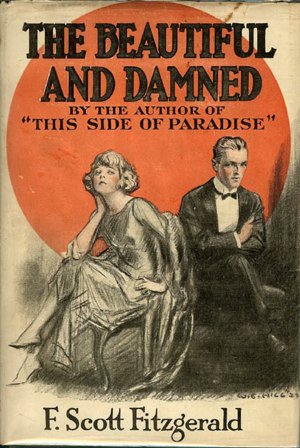
So, I have just finished The Beautiful and Damned, by F. Scott Fitzgerald, which, it has to be said, is not his best work, but nevertheless is wonderfully, beautifully, amazingly, marvelously fabulously written. His main two characters, Anthony Patch and Gloria Gilbert, are about as flawed as any two human beings could be. They are drinkers (and at some point in the book, Anthony turns into a heavy alcoholic), thrifty and have no desire to understand each other whatsoever. They marry each other for what seems to be a temporary infatuation with each other. Poor old Anthony is head-over-heels in love with Gloria and is her obedient servant. He worships the very ground that she walks on, and her return for this is to treat him like any other man that she's been with. You start to feel sorry for him, until the one fateful night that Anthony's rich grandfather comes to visit. Not to give too much away, but he is their inheritance, and without him, and carrying on with the way they live life, they are broke without his money. And he needs to die soon or they are toast.
I thought that the characters were interesting, not very diverse, but interesting. Richard Caramel is the typical "I'm-a-writer" who has only written one good book and the others are trash; Joseph Bloeckman is the typical "older guy" who has been in the heroine's life; Maury Noble is, at first, the only different one, but becomes just like the other s when he cuts them dead in the street when they've fallen from their social pedestal. Basically, the book is an observation on society and the expectations that you must succumb to if you want to be viewed as, so to speak, aristocratic. Keeping in mind that this was set in the jazz age, and seeing as I don't know that much about it, Fitzgerald show you the good times and the bad times, whilst managing to keep the story in mind and weave in details of real life, but romanticising them for literary purposes. All in all, it was a great book and I highly recommend it to anyone who liked The Great Gatsby! I'll be reading the Angus, Thongs and Full-Frontal Snogging series next, so my next post will be when I've finished the series.
Saturday, 22 January 2011
Northanger Abbey
Hello, and welcome to my first post! As you may have guessed, I am an avid reader, and generally like to waste my time whiling away the hours either in a bookshop, or on the Waterstone's website.So, when I was set the task of setting up a blog on a subject of my own choice, what better subject than the vast plain of literature?
As you may have guessed, I have recently finished Northanger Abbey, by Jane Austen. This book is so interesting, because it is so unlike any of her other full-length novels. Rather than being wholly about a woman's secret love for a man far too "out of her league", Northanger Abbey, although partially about love and it's trials, mainly involves the misguided advice of fiction novels. One continual reference throughout the book is Udolpho, by Ann Radcliffe, which is the book of choice for its heroine, Catherine Morland. Jane Austen continually mocks her own profession, and the ideas books can put into people's minds. Catherine Morland, being an incredibly naive girl of 17 when the book starts, formulates her own ideas of people and situations (often unfounded and incredibly romantic) based on many of the Gothic novels she has read.
In terms of characters, they are carefully crafted to make the reader have an opinion of them, whether good or bad. Oh, the awful Thorpes, and the wonderful Eleanor and Henry Tilney, the foolish Mrs Allen, the materialistic General Tilney; one way or another, the reader must formulate an opinion of them throughout the book. There were many times when I felt like jumping into the book and giving Isabella Thorpe a good old kick up the you-know-what, and likewise to John Thorpe. I don't want to spoil the story for anyone, but when John Thorpe deceives poor Catherine in order to get her to take a drive with him is sickening. When I was reading this, I was on the tube, and had to stop myself from screaming out loud, or at the very least, keep my mouth from falling wide open.
In any case, the book is incredibly good! Not my favourite, but amazing nonetheless! I'm going to be reading The Beautiful and The Damned, by F. Scott Fitzgerald next, so watch out for updates!
In terms of characters, they are carefully crafted to make the reader have an opinion of them, whether good or bad. Oh, the awful Thorpes, and the wonderful Eleanor and Henry Tilney, the foolish Mrs Allen, the materialistic General Tilney; one way or another, the reader must formulate an opinion of them throughout the book. There were many times when I felt like jumping into the book and giving Isabella Thorpe a good old kick up the you-know-what, and likewise to John Thorpe. I don't want to spoil the story for anyone, but when John Thorpe deceives poor Catherine in order to get her to take a drive with him is sickening. When I was reading this, I was on the tube, and had to stop myself from screaming out loud, or at the very least, keep my mouth from falling wide open.
In any case, the book is incredibly good! Not my favourite, but amazing nonetheless! I'm going to be reading The Beautiful and The Damned, by F. Scott Fitzgerald next, so watch out for updates!
Subscribe to:
Posts (Atom)